Galvanized Pipe in Portland Homes: Problems, Timelines, and When to Worry
If your Portland home was built before 1970, there is a good chance it still has some galvanized steel pipe in the walls, the crawl space, or underground. Galvanized pipe was the standard material for residential water supply lines for most of the 20th century. It was strong, widely available, and reasonably priced. But it has a lifespan. Most galvanized pipe lasts 40 to 70 years before problems begin. If you have original galvanized pipe in a home built in the 1940s, 1950s, or 1960s, you may already be past that window.
What Is Galvanized Pipe?
Galvanized steel pipe is regular steel pipe that has been coated with a thin layer of zinc. The zinc coating was meant to prevent rust. It works well for the first couple of decades. But over time, the zinc coating wears away from the inside of the pipe. Once the bare steel is exposed to water, rust begins. The rust builds up as a hard deposit on the inner wall of the pipe. This deposit is called scale. As scale accumulates, the opening inside the pipe gets smaller. Water pressure drops. Flow slows. Eventually the scale can completely block a section of pipe or cause the pipe wall itself to corrode through, creating a leak.
How to Tell If Your Home Has Galvanized Pipe
The easiest check is to look under a bathroom sink or in a utility room where supply lines are visible. Galvanized pipe is a dull silver-gray color, distinctly different from the shiny reddish tones of copper or the white and gray colors of PVC or PEX plastic pipe. It is a rigid metal pipe with visible threaded fittings at each connection. If you run a magnet along the pipe and it sticks, you have steel. Copper is not magnetic. That simple magnet test can tell you immediately what you are looking at without cutting anything.
Another clue is your water. Galvanized pipe that is heavily corroded on the inside will produce water that has a slightly brownish or orange tint, especially first thing in the morning before you run the tap for a minute. You might also notice a metallic taste or see rust-colored staining in your sink basins or toilet tanks. These are signs that the corrosion inside the pipe has reached a point where it is affecting water quality, not just flow.
The Timeline of Galvanized Pipe Failure in Portland
Not all galvanized pipe fails at the same rate. Several factors speed up or slow down the corrosion process in Portland homes specifically. Portland water is soft. Soft water is generally less corrosive than hard water from a mineral standpoint, but it is slightly more acidic than hard water. That mild acidity accelerates the chemical reaction between the water and the zinc coating over time. The pH of Portland Water Bureau supply runs between 7.4 and 7.8, which is near neutral, but the soft water chemistry still tends to wear galvanized pipe faster than it would in a hard water region.
What Goes Wrong and When
Galvanized pipe problems tend to show up in a predictable sequence. The first sign is usually reduced water pressure, particularly in the rooms that are farthest from the main entry point. Scale builds up at the elbows and tees first because those are the points where water slows down and minerals have more time to deposit. The shower head in the master bath at the back of the house starts to feel weaker than it used to. The toilet in that bathroom takes longer to fill. This can go on for years before anyone suspects the pipe.
The next stage is visible water quality issues. The scale that has been building inside the pipe begins to break loose in chunks. This causes short bursts of discolored water, usually brown or orange, when a faucet is first turned on. It may only last a few seconds and then clear up. Many homeowners assume this is a temporary city water issue. It is not. It is the inside of their own pipe breaking down.
The final stage is a full leak. A section of pipe that has corroded thin from the inside will eventually fail at the wall. This can happen at a fitting joint, at a section of straight pipe where corrosion was deepest, or at any point where physical stress meets a thin pipe wall. At this stage, water escapes into the wall cavity, under the floor, or into the crawl space. The leak may be slow at first, but the corroded pipe wall rarely holds. The leak grows over time.
Where Galvanized Pipe Leaks Most Often in Portland Homes
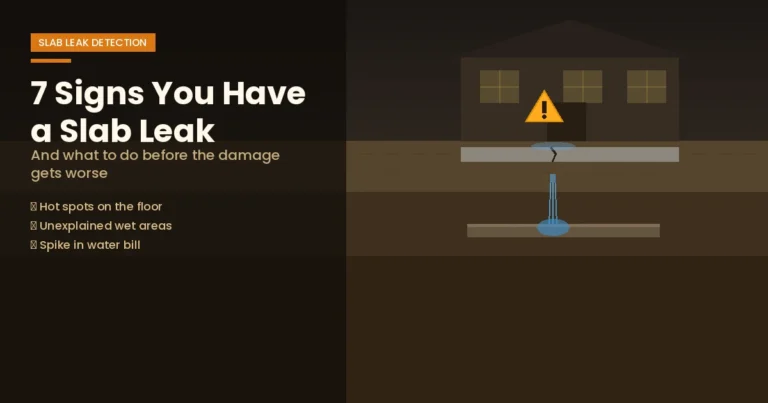
The most common failure points in Portland area homes are under the concrete slab, in the crawl space below the floor structure, and inside wall cavities near exterior walls. Slab homes from the 1950s and 1960s in neighborhoods like Sellwood, St. Johns, Lents, and outer Southeast Portland often have the original galvanized supply lines still buried below the concrete. These lines are 60 to 70 years old in many cases. When they fail, they fail as a slab leak, which means water is escaping under the foundation.
Crawl space homes in Milwaukie, Lake Oswego, and Gresham that were built in the same era often have galvanized supply lines that run horizontally through the crawl space before going up into the walls. The connections where horizontal runs meet vertical drops are particularly vulnerable. A small pinhole at one of these fittings can drip steadily into the crawl space for months without anyone noticing until the subfloor starts to soften or a musty smell works its way into the living area.
When to Replace vs. When to Detect and Repair
Homeowners with galvanized pipe face a choice between two approaches. The first is a full repipe, where all of the galvanized supply lines in the home are replaced with copper or PEX. This is the permanent fix. It eliminates all future galvanized pipe problems at once. The second approach is to detect and repair individual failures as they occur. This makes sense when the pipe is in generally good condition with isolated problem sections, or when a full repipe is not financially possible right now.
If you have galvanized pipe and you are already seeing pressure loss, discolored water, or signs of a hidden leak, the first step is to confirm where the leak is before a plumber starts any work. Underground pipe detection or slab leak detection finds the exact break so the repair is targeted and the pipe wall is not cut in the wrong location. Call (503) 914-2356 for a same-day inspection across the Portland metro.
Living With Galvanized Pipe: Practical Steps
If you know your home has galvanized pipe and you are not ready to repipe the whole house, a few steps reduce your risk. First, know where your main shutoff valve is and make sure it operates smoothly. A valve that has not been turned in 20 years may be seized. Test it now, not during an emergency. Second, do the water meter check described in our guide every few months. It takes five minutes and tells you immediately if water is moving through the system when nothing is running. Third, look at the exposed sections of pipe in your crawl space or utility room once a year. If you see white powder buildup around fittings, that is mineral salt from a slow seep. That fitting is starting to fail.
Fourth, consider having a plumber do a water pressure test on the system as part of a general home maintenance visit. A line that holds pressure well is intact. A line that loses pressure when isolated is leaking somewhere. This test, combined with acoustic detection, can locate a galvanized pipe failure before it becomes a flood. For more information or to schedule an inspection, visit our contact page or see the full list of areas we serve in the Portland metro.
Galvanized Pipe and Portland Neighborhoods: What the Building Records Show
Portland grew rapidly after World War Two. Entire neighborhoods were built in just a few years to house returning veterans and their families. Lents, Foster-Powell, Woodstock, St. Johns, Arbor Lodge, and the outer eastside neighborhoods saw most of this construction between 1945 and 1965. Homes in these areas are now between 60 and 80 years old. The original galvanized supply pipe in these homes, if it has never been replaced, is operating well past the typical lifespan for the material.
Further out, the first-ring suburbs of Portland, including Milwaukie, Lake Oswego, Beaverton, and older parts of Gresham, saw their biggest growth in the late 1950s and early 1960s. Galvanized pipe was still the dominant material for residential supply lines in that era. Many of those homes still have at least some original galvanized sections, particularly the buried underground runs and the supply lines inside concrete slabs where replacement is most disruptive.
If you bought an older home in the Portland metro and the inspection report noted galvanized plumbing, this guide should give you a clearer picture of what to watch for and how to respond when something changes. The goal is not to create alarm but to help you act early, when a small repair is still possible, rather than late, when a slow leak has had months to damage the structure around it.
One final note for buyers of older Portland homes. A home inspection during a real estate transaction rarely tests water pressure in a way that reveals early galvanized pipe scale buildup. The inspector opens faucets and checks for obvious flow issues, but mild pressure loss from partial blockage can pass a general inspection easily. If you are buying a home built before 1975 and the inspection notes galvanized plumbing, ask the seller for any records of previous pipe work or repipe history. If no records exist, budget for at least a plumbing pressure test in the first year of ownership. That single test will tell you whether the galvanized supply lines in your new home are still holding pressure reliably or already losing it slowly to internal corrosion. Catching it at the pressure-loss stage costs far less than catching it at the leak stage.