

Slab Leak Detection PortlandFind It Under the Concrete. Fix It Right.
Your floor is warm in one spot. Your water bill jumped and nothing changed. You hear water running at midnight with every tap off. That is a slab leak. Portland homeowners call us when they need slab leak detection Portland trusts — accurate, same-day, and done without tearing up the floor.
(503) 914-2356 — Call NowWhat Do Slab Leaks Look Like? The Signs Portland Homeowners Miss First
If you searched for slab leak detection Portland, something already caught your attention. A warm floor, a rising water bill, a sound you cannot explain. Most people do not see a slab leak. They feel it. A warm band across the kitchen tile. A carpet that stays damp no matter how many times you dry it. A hot water heater that keeps running long after anyone used the shower. These are not random problems. They are one problem, living under your floor.
Can you feel a slab leak without calling anyone?
Sometimes yes. Press your palm flat to the tile in the area you suspect. Unexplained warmth or a faint vibration underfoot points to a pressurized pipe below. That is your first sign. Get it checked before you do anything else.
Warm or cool strip across tile floor with no clear cause
Water bill that jumped without any change in your habits
Sound of running water at night with every tap off
Carpet or hardwood that feels soft or damp underfoot
Mold smell near baseboards even on dry summer days
Hot water heater running longer than normal
New cracks in tile, drywall, or along the baseboard line
Grass that stays bright green along the foundation in July
Is a Slab Leak a Big Deal? Here Is What Happens When You Wait
Yes. A slab leak left alone does not stay small. In the first few weeks, water soaks into the concrete and softens the base beneath. Within a month, hardwood above starts to warp and tile begins to crack. By month three, mold grows inside the subfloor where you cannot see it. By month six, you are looking at foundation repair on top of a plumbing repair.
What happens if water gets under a concrete slab? It erodes the compacted soil that holds the slab level. The slab shifts. Doors stop closing properly. Cracks travel across the walls. What starts as a plumbing problem becomes a structural one. That is why slab leak detection in Portland matters before repair begins, not after.
Is a slab leak an emergency?
If your meter moves with every tap off, the floor feels warm in a specific band, and you hear water at night, call today. Not next week. Every day it runs, the damage spreads wider beneath you.
Why Portland Slab Leaks Are Different From Any Other City
Portland is not Phoenix. Portland is not Houston. The reasons homes here develop slab leaks are specific to this city. Knowing them tells you exactly why guessing without proper detection here is a costly mistake.
Post-Tension Slabs in Beaverton, Lake Oswego, and Tigard
Walk any 1970s neighborhood off Murray Boulevard in Beaverton or along Boones Ferry Road in Lake Oswego. Nearly every home sits on a post-tension slab. Steel cables run through the concrete under tension. Cut one without finding the exact break first and the slab can fail structurally. Detection before any repair is not optional here. It is the only safe way to work.
Soft Water Attacking Copper From Below
Portland’s Bull Run water is low in minerals. That sounds like a good thing. Under a concrete slab, it is not. Mineral-rich water leaves a protective scale layer inside copper pipe. Soft water strips that layer away and eats the copper wall directly. Pipe buried in concrete since 1965 has been bathed in that soft water for 60 years. The slab above it never lets the pipe dry out, breathe, or be inspected. That is why under-slab copper fails faster than copper inside your walls.
Clay Soil Moving Beneath the Slab
Willamette Valley clay expands significantly when wet and shrinks when dry. In Tigard, Tualatin, and outer Beaverton, that seasonal movement can shift the slab itself by fractions of an inch. A pipe joint that holds tight in winter can develop a stress fracture when the dry summer pulls the earth away beneath it. The concrete above the pipe does not flex with this movement. The pipe joint does. That is the crack we find.
How Long Can a Slab Leak Go Undetected in a Portland Home?
Years. Some of the worst leaks we find have been running for two or three years before anyone noticed. Portland’s wet climate from October through April makes it easy to miss. Extra moisture behind a wall blends into the background for months before a stain appears on the baseboard.
A slow pinhole in copper pipe under your slab can release 250 gallons a day and leave nothing visible at the surface for months. By the time you see a watermark near SE Woodstock or hear something moving off NW Nicolai, the damage inside the slab is already months old.
How do I know if the leak has been running a long time?
Mold inside the subfloor, warped hardwood with no surface water source, and soft spots in drywall near the floor are all signs of a long-running leak. Our report timestamps every photo, which matters when you file an insurance claim.
How Can You Detect a Slab Leak Without Breaking the Floor?
Concrete is 4 to 6 inches thick in most Portland slab homes. You cannot hear through it with your ear. You cannot see through it with a flashlight. Three tools were built specifically for this problem, and each one works differently depending on how deep the pipe runs and whether it is a hot or cold line.
That is what professional slab leak detection Portland homeowners call us for. The right tool for your specific slab, not the fastest one for the technician.
Acoustic Ground Microphones
We press sensitive ground microphones directly to the slab surface in a grid pattern. Pressurized water escaping through a crack produces a distinct frequency inside concrete. We map the signal intensity across the floor until we hit the loudest point. That point sits within 6 inches of the actual break. Nothing is touched until the map is complete.
Infrared Floor Scanning
Hot supply lines under the slab warm the concrete above them. A cold line leak creates a spreading cold spot. Our infrared camera scans the entire floor surface in one pass and shows us the thermal map. In post-tension slab homes, this method also reveals whether a cable run crosses the repair zone before any cut is made.
Tracer Gas Injection
For breaks buried 12 or more inches below the slab surface, we seal the pipe and inject a safe inert gas. The gas travels through the break and rises up through the concrete. Our surface detector traces the gas plume to within inches of the escape point. Used on post-tension zones where a misplaced drill is not an option.
Why ±6 inch accuracy matters under a slab: A post-tension cable runs every 24 to 36 inches through the concrete. A misplaced cut severs a cable. A precise mark from acoustic or thermal scanning tells us exactly where to drill without touching the structural grid. That accuracy is the only reason this job stays safe and contained.
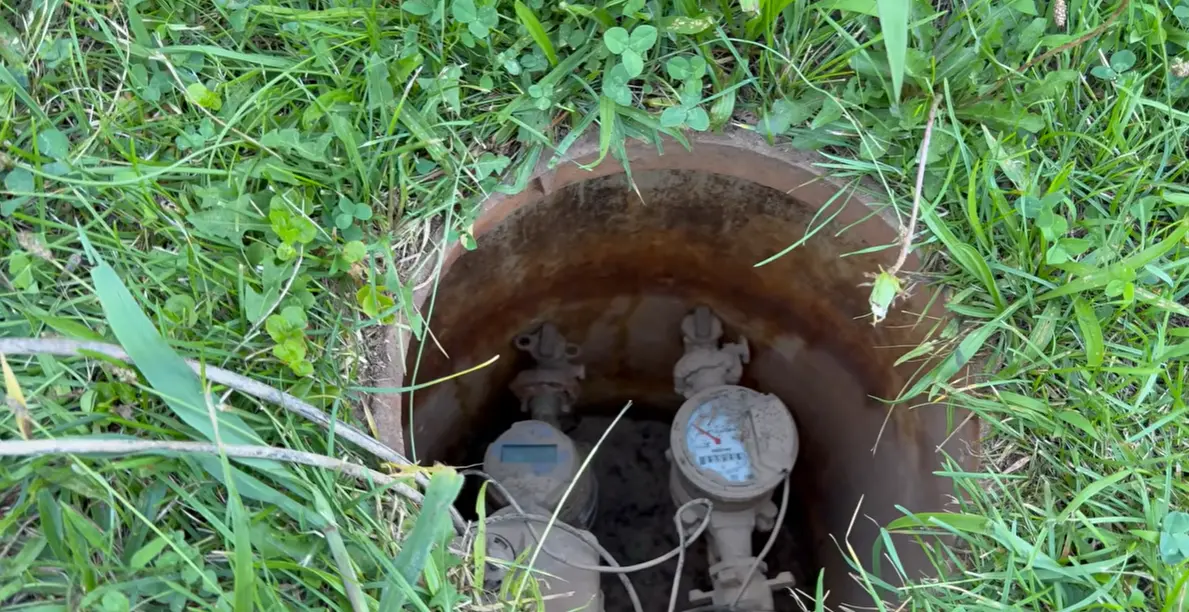
Why Accurate Detection Matters Here
Portland’s unique combination of post-tension slabs, soft Bull Run water, and Willamette Valley clay soil means every slab leak job demands local expertise. We’ve mapped hundreds of Portland slabs and know what to look for before we ever set up a scan.
How a Slab Leak Detection Job Actually Works: Step by Step
Build Type Confirmed
Before we arrive, we ask your home’s build year and whether you know the slab type. Post-tension slabs from 1965 to 1995 require cable mapping before any scan. We bring the right equipment for your specific slab, not a generic kit.
Isolation Test
We shut off your main and confirm with a pressure gauge that pressure is dropping. This separates an active under-slab leak from a toilet flapper or fixture drip before we scan a single inch of floor.
Floor Grid Scan
We divide your floor into a scan grid. Acoustic microphones move through each zone. Thermal imaging follows. Each method cross-checks the other. We do not stop until both signals agree on the same spot.
Cable Zone Check
On post-tension homes, we confirm the marked repair spot sits clear of the cable grid before any drilling plan is made. This step does not exist on a standard plumbing call. It is what keeps your slab structurally safe.
Spot Marked and Photographed
The exact location is marked on the floor. Dated photos show the scan pattern, the signal readings, and the final marked spot. That documentation goes into your written report the same day.
Repair Path Explained
We tell you what the break looks like, where it sits relative to the cable grid, and what your repair options are. Targeted patch, above-slab reroute, or full repipe. You decide. See our leak repair Portland page for what each repair involves.
Same-Day Written Report
Every detection job ends with a dated written report showing the scan pattern, signal readings, and the exact marked location on your floor. This documentation is what your plumber needs to open the right spot the first time, and what your insurer may require for a claim.
How Much Does Slab Leak Detection Cost in Portland?
Detection is a flat-fee inspection. We give you the number before the tech arrives. No surprise charges when someone shows up at your door. Call (503) 914-2356 for a quote based on your home, your slab type, and your situation.
What moves the number: a pipe in an accessible crawlspace is faster to reach than one buried deep under a poured post-tension slab. A single copper break is simpler than a failing galvanized run that has spread to multiple joints. We walk through every factor before any work starts. When you hire us for the repair, the inspection fee goes toward the job.
Are Slab Leaks Expensive to Repair?
Detection accuracy is what controls repair cost. When we pinpoint the break within 6 inches, the repair is targeted. One cut. One fix. When a crew guesses without proper detection equipment, they open the floor in three spots and charge for all three. The flat-fee detection is not an added cost. It is what keeps the repair from spiraling.
What is the average cost of leak detection in Portland?
Detection runs as a flat fee confirmed before arrival. Call us directly. We do not post a one-size-fits-all number because slab depth, pipe type, and home layout all affect the job. Every quote is specific to your address.
Will Home Insurance Cover a Slab Leak in Portland, Oregon?
Most Oregon home insurance policies cover sudden and accidental water damage. The key word is sudden. A slab leak that has been running for months before anyone noticed is the kind adjusters push back on hardest. Your coverage argument lives or dies on when you can prove you discovered it.
Our written report includes the scan grid, the signal readings, the marked location, and a timestamped photo record from the day we found it. That is the document your adjuster needs. It establishes discovery date and proves the break required professional equipment to locate. We have seen that report make the difference between a paid claim and a denied one on slab jobs in Beaverton, Lake Oswego, and Tigard.
Should I Repipe Instead of Repairing the Slab Leak?
Detection tells you what the break looks like and where it sits. Whether to patch it, reroute around it, or replace the whole line is the decision that comes after. That decision belongs on a different page. Our leak repair Portland page walks through every repair method, what each one costs, and when each one makes sense for your home. We always show you both options before any tool touches the slab.
How Long Does Slab Leak Detection and Repair Take?
Detection runs one to three hours on-site, same day in most cases. A targeted repair at a marked location finishes the same day or the following morning. A full reroute where the pipe travels a new path through the walls takes one to two days. Post-tension slab repairs add time because every cut requires care around the cable grid running through the concrete.
We confirm the timeline before we start so you can plan around it. No open-ended jobs, no vague estimates.
Real Slab Leaks We Found in Portland Homes
The Situation
A homeowner off Murray Boulevard noticed the kitchen tile felt warm in one east-to-west strip. The water bill jumped noticeably two months in a row. No visible water anywhere in the house. Post-tension slab, 1979 build.
What We Did
Acoustic sensors found a break in a hot supply line under the slab within 6 inches. Thermal imaging confirmed the position. We marked the spot before any tool touched the floor.
The Outcome
One tile removed. One repair made. Bill returned to normal within one billing cycle. No floor replacement needed. Cable system untouched.
The Situation
A 1981 post-tension slab home near Boones Ferry Road. Owner heard running water two nights in a row. Crawlspace was dry. Meter confirmed an active leak. No visible damage anywhere on the surface.
What We Did
Tracer gas test located the break 14 inches below the slab surface, inside the post-tension cable zone. We coordinated the repair to avoid the cable grid entirely.
The Outcome
Repair completed without structural impact. Insurance accepted our dated report and covered the subfloor water damage.
The Situation
A 1974 slab-on-grade home near SW Pacific Highway. Mold smell near the living room baseboard. Floor soft in one corner. Owner had waited six weeks thinking it was a roof issue.
What We Did
Thermal imaging identified a cold-water line leaking below the living room corner in 20 minutes. Acoustic confirmed the position. One repair location marked.
The Outcome
Repair done in one day. Mold remediation handled separately. Caught before water reached the wall framing.
What Portland Homeowners Say
“Two other companies told us they would have to open the floor in three different spots. These guys found it in under two hours and marked one location. That was it. Done the same day.”
“Our water bill was climbing every month and nobody could explain it. They found a hot line leak under our kitchen and had it fixed by 4pm the same day they came out.”
“Straight shooters. They told me exactly what they found, gave me two repair options, and let me decide. No upsell, no pressure. I wish I had called three weeks sooner.”
Slab Leak Detection Across Portland Metro
Our slab leak detection Portland metro coverage runs seven days a week, same day in most cases. From Beaverton to Gresham, we come to you.
Beaverton
High concentration of 1970s and 1980s post-tension slabs. Murray Boulevard, Walker Road, Sunset Highway corridor.
Lake Oswego
Post-tension and slab-on-grade throughout. Boones Ferry Road, Kruse Way, Lake Grove neighborhoods.
Tigard
Pacific Highway corridor, Bull Mountain, Metzger. Heavy clay soil movement every dry season.
Tualatin
1980s builds near Tualatin-Sherwood Road. Copper corrosion common in original slab pipe.
Gresham
Older slab builds east of I-205. Mt. Hood Community College area and surrounding streets.
Milwaukie
Mixed slab and crawlspace construction along the SE McLoughlin Boulevard corridor.
SE Portland
Slab homes near SE Powell, Woodstock, and Division. Galvanized runs common in pre-1960 builds.
West Hills
Hillsboro and Beaverton Highway corridor. Steep lot drainage adds stress to buried pipe joints.
St. Johns
North Portland, older infrastructure. Original copper in many slabs along N Lombard corridor.
Slab Leak Detection Portland — Questions We Hear Every Day
Hear Water You Cannot Find? Call Today.
Your floor is warm. Your bill keeps climbing. You hear it at night and cannot explain it. Those signs point one direction. Slab leak detection Portland homeowners count on is what we do every day, in homes just like yours across Beaverton, Lake Oswego, Tigard, and the full metro. We find the exact break, prove it with dated photos, and give you a clear repair path before we leave your property.
Same-day available · CCB Licensed Oregon · Written report included · 7 days a week
What Portland Homeowners Say
“Found a hot-water slab leak in my 1962 ranch in Laurelhurst in under an hour. Marked the spot to the inch. My plumber said the mark was dead-on.”
“My insurance adjuster needed a written report before authorizing repairs. This crew had it documented and emailed the same day. Claim approved without argument.”
“I was dreading having my tile floor demolished. They pinpointed the leak from above using acoustic tools. One small access point. That was it.”