Pool Leak vs Evaporation: How to Tell the Difference
Your Pool Is Losing Water. But Is It a Leak?
Every pool loses some water. That is normal. The question is how much and why.
If you are filling your pool every few days, or if you notice the water level dropping faster than usual, you are probably wondering whether you have a leak or whether the summer heat is just doing its thing. This matters because a real pool leak can damage your equipment, erode the ground under your deck, and waste thousands of gallons of water over a season.
This guide walks you through how to tell the difference between pool leak vs evaporation, how to do a simple test yourself, and what to do if the test points to a leak.
How Much Water Does a Pool Normally Lose to Evaporation?
A typical outdoor pool loses between a quarter inch and half an inch of water per day to evaporation. Over a week, that adds up to about 1.5 to 3.5 inches. That sounds like a lot, but it is considered normal and is not a cause for alarm on its own.
Evaporation is faster when the air is hot and dry, when there is a lot of wind, and when the pool is heated. A heated pool can lose significantly more water than an unheated one because the temperature difference between the water and the air accelerates evaporation.
Portland summers are generally mild compared to desert climates, but July and August can be warm and breezy. During those peak weeks, evaporation rates can hit the higher end of normal. That said, if you are losing more than an inch a day or the level drops noticeably overnight, evaporation alone usually cannot explain it.
Signs That Point to a Real Pool Leak
Some signs are easy to spot. Others take a closer look.
You are losing more than an inch of water per day
This is the most reliable early indicator. If your pool consistently drops more than one inch per day when it is not being used heavily and the weather is not extreme, a leak is likely the cause. Track the loss over three or four days to establish a pattern before drawing conclusions.
The ground around the pool is wet or soft
If the soil around the pool deck is consistently soft, spongy, or wet even when it has not rained, water is getting into the ground somewhere it should not be. This could be a leak in the pool shell, a pipe fitting, or around the main drain.
You are adding water more than twice a week
Topping off a pool once a week in summer is normal. If you are doing it multiple times a week to keep up, that is a sign the loss is beyond what evaporation accounts for.
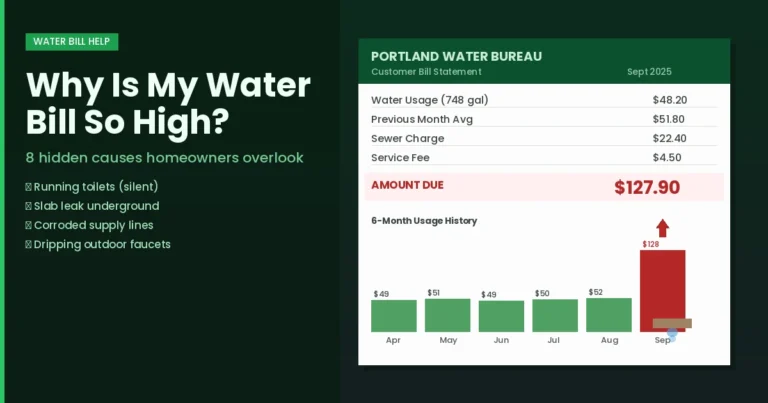
Your water bill is higher than last summer
If your water usage has gone up noticeably compared to the same period last year and nothing else has changed, the extra water is going somewhere. A leaking pool is one of the most common culprits homeowners overlook because it happens gradually.
Pool equipment is cycling more than usual
Autofill systems connected to the water supply will run constantly if there is a leak. If you have an autofill and it seems to be running all the time, that is a strong signal that the pool is losing water faster than evaporation can account for.
Cracks in the deck or pool shell
Visible cracks in the concrete or plaster shell, especially ones that are getting wider over time, can be both a sign and a cause of a leak. Water escaping through a crack in the shell can also erode the soil underneath, which accelerates the problem.
The Bucket Test: The Easiest Way to Know for Sure
The bucket test is the standard method for separating evaporation from a real pool leak. You do not need any tools. You just need a bucket, a marker, and 24 to 48 hours of patience.
How to do the bucket test
- Fill a plastic bucket with pool water. Use pool water, not tap water, so the temperature and chemistry match.
- Place the bucket on the first or second step of the pool so it sits in the water. The bucket should be submerged a few inches, not floating.
- Mark the water level inside the bucket with a piece of tape or a permanent marker.
- Mark the pool water level on the outside of the bucket or on the pool wall at the same time.
- Wait 24 hours. Do not swim, do not run the autofill, and do not add any water.
- After 24 hours, compare the two levels. The water inside the bucket dropped because of evaporation. The pool water dropped because of evaporation plus anything else.
If both dropped by the same amount, what you are seeing is evaporation only. No leak.
If the pool dropped more than the bucket, you have a leak. The difference between the two levels tells you how much water beyond evaporation the pool is losing per day.
Run this test with the pump on for 24 hours, then again with the pump off for 24 hours. If the pool loses more water when the pump is running, the leak is in the plumbing or equipment. If it loses the same amount either way, the leak is in the shell or shell fittings.
Where Do Pool Leaks Happen?
Pool leaks are not always in obvious places. Here are the most common locations:
Shell cracks
Small cracks in the plaster or concrete shell can allow water to seep out slowly. These are sometimes visible but can also be hairline-thin and hard to spot without looking closely. Cracks around the main drain, return jets, or skimmer fittings are especially common leak points.
Skimmer and return line fittings
The fittings where the plumbing connects to the pool wall can develop leaks over time. The gaskets and o-rings around these fittings degrade and crack. Even a small gap in the seal around a return jet can lose significant water over a day.
Underground plumbing
The pipes running between the pool and the equipment pad are underground. These can crack or pull apart at joints due to ground movement, root intrusion, or age. An underground plumbing leak is harder to find because there is no visible wet spot at the pool. The water just goes into the soil.
Main drain
The main drain at the bottom of the pool is a common leak location. If the fitting or gasket around the drain has failed, water can escape directly into the ground below the pool. This type of leak is often missed because it happens at the deepest point.
Equipment and fittings
The pump, filter, heater, and valves can all develop leaks at seals, unions, and connections. An equipment pad leak is often the easiest to find because you can see water dripping or pooling around the equipment.
What Happens If You Ignore a Pool Leak?
A slow pool leak feels minor because the pool still looks full most of the time. But over a season, the damage adds up.
Water escaping through the shell or fittings erodes the soil around and below the pool. Over time, voids form in the ground. Those voids allow the pool shell to shift and settle unevenly, which creates bigger cracks and bigger leaks. Decks can crack and sink. In severe cases, the pool structure itself becomes compromised.
Water that leaks into the soil under a pool deck can also undermine the foundation of any adjacent structure. If your pool is close to the house or a retaining wall, an untreated pool leak can eventually create problems that affect the building foundation as well.
The water waste is also significant. A pool losing an extra inch per day beyond evaporation is losing roughly 500 gallons every 24 hours for a standard 20,000-gallon pool. Over a summer, that is tens of thousands of gallons, which adds up on your water bill and is not great for the environment either.
How Pros Find Pool Leaks
When the bucket test confirms a leak but the source is not obvious, a professional leak detection service uses specific tools to find it.
Dye testing is one method. A technician injects a small amount of non-staining dye near suspected leak points and watches to see if the dye gets pulled through a crack or fitting gap. This works well for shell and fitting leaks when the technician knows roughly where to look.
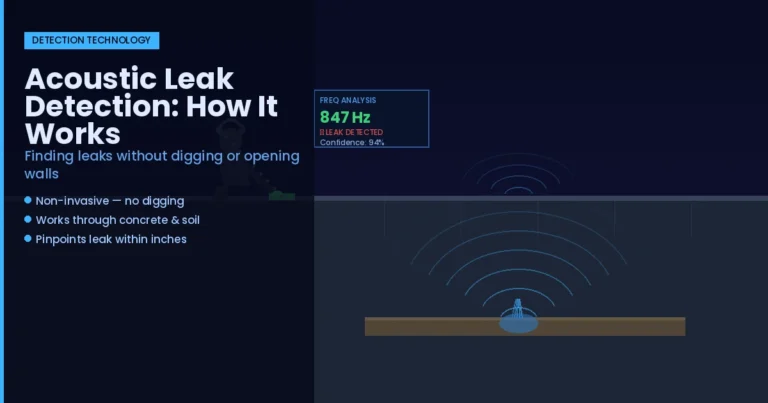
Pressure testing is used for the underground plumbing. Each line is isolated and pressurized. If a line cannot hold pressure, it has a leak somewhere along its length. From there, acoustic equipment is used to listen for the sound of water escaping through the pipe into the soil, narrowing down the exact location.
This combination of pressure testing and acoustic detection means the technician can find an underground pool pipe leak without digging up the entire yard. They identify the spot first, then dig only at that location.
What About Portland Pools Specifically?
Portland does not have the blistering heat of Phoenix or Las Vegas, so evaporation is slower here than in desert climates. That means if your Portland pool is losing a significant amount of water, evaporation is less likely to be the full explanation than it would be somewhere hotter.
Clay soil is also a factor. Portland area soil expands when wet and shrinks in summer dry spells. That movement shifts underground plumbing and can crack pool shells over time, especially in pools more than 15 to 20 years old. If your pool was installed in the 1990s or earlier and has never had a leak inspection, it may be worth a professional look.
When to Call for a Leak Inspection
Call for a professional inspection if:
- The bucket test shows the pool is losing more water than evaporation explains
- You are adding water to the pool more than twice a week in normal weather
- The ground around the pool is consistently wet without a rain event
- You notice cracks in the shell or deck that were not there last year
- Your water bill is higher this summer than the same period last year
A leak detection inspection for a pool typically takes a few hours. The technician will do a systematic check of the shell, fittings, and plumbing lines. At the end, you will know whether you have a leak, where it is, and what type of repair is needed. That information lets you make a real decision rather than guessing and adding water every few days hoping the problem goes away.
Evaporation vs Pool Leak: Quick Reference
| Situation | Likely Cause |
|---|---|
| Losing up to half an inch per day | Normal evaporation |
| Losing more than one inch per day consistently | Likely a leak |
| Bucket test shows equal drop inside and outside | Evaporation only |
| Bucket test shows pool dropped more than bucket | Real leak present |
| Wet ground around pool with no rain | Shell or plumbing leak |
| More loss when pump is running vs off | Plumbing or equipment leak |
| Same loss pump on or off | Shell or fitting leak |
The Bottom Line
Evaporation is a normal part of pool ownership. But if your pool is losing more than about an inch a day consistently, the bucket test is your next step. It is free, it takes five minutes to set up, and it gives you a real answer. If the test points to a leak, a professional inspection can find the exact source so the repair is done right the first time without tearing up your whole yard or deck looking for it.