

Leak Repair Portland
Fix It Right the First Time.
You know where the leak is — now you need it fixed properly, not patched. We repair supply line breaks, pipe joint failures, slab breaches, and copper corrosion damage across the Portland metro using licensed, permitted work with a written warranty.
(503) 914-2356Same-day repair available · Oregon CCB Licensed · Written warranty on all work
Portland’s Local Leak Repair Specialists
From pinhole copper failures to slab leaks under concrete, we repair every pipe type found in Portland homes — with same-day service, clean workmanship, and full permits where required.
Leak Repair in Portland — What the Job Really Involves
Most homeowners call us after the water bill spiked, after a detection crew marked a spot on the floor, or after they found water where it shouldn’t be. The repair itself depends entirely on where the break is and what pipe material you’re dealing with.
Portland’s housing stock runs the full spectrum of pipe materials — original copper in 1960s and 70s homes, early CPVC in 1980s builds, galvanized steel in pre-1960 houses, and PEX in anything remodeled or built after about 2000. Each material fails differently and gets repaired differently. The wrong approach for the pipe you have can make the situation worse.
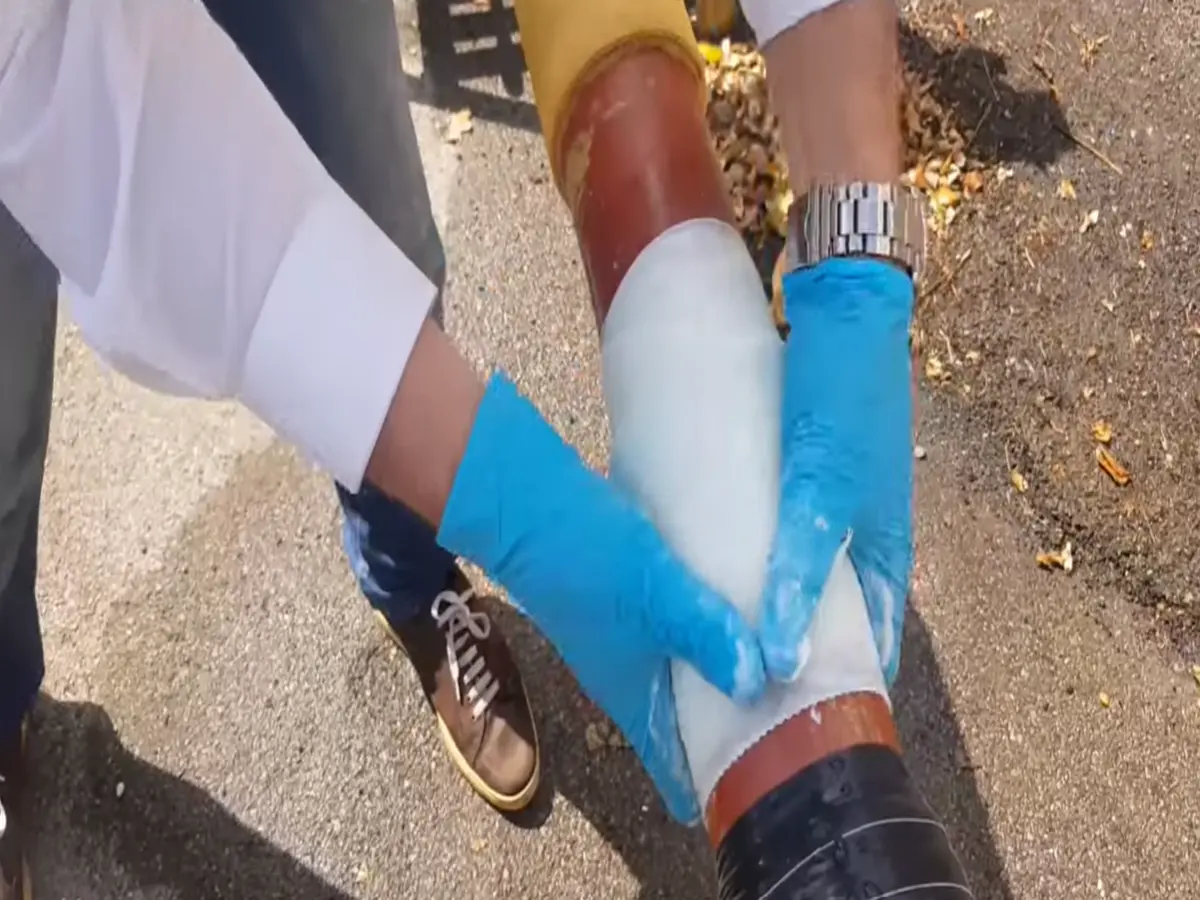
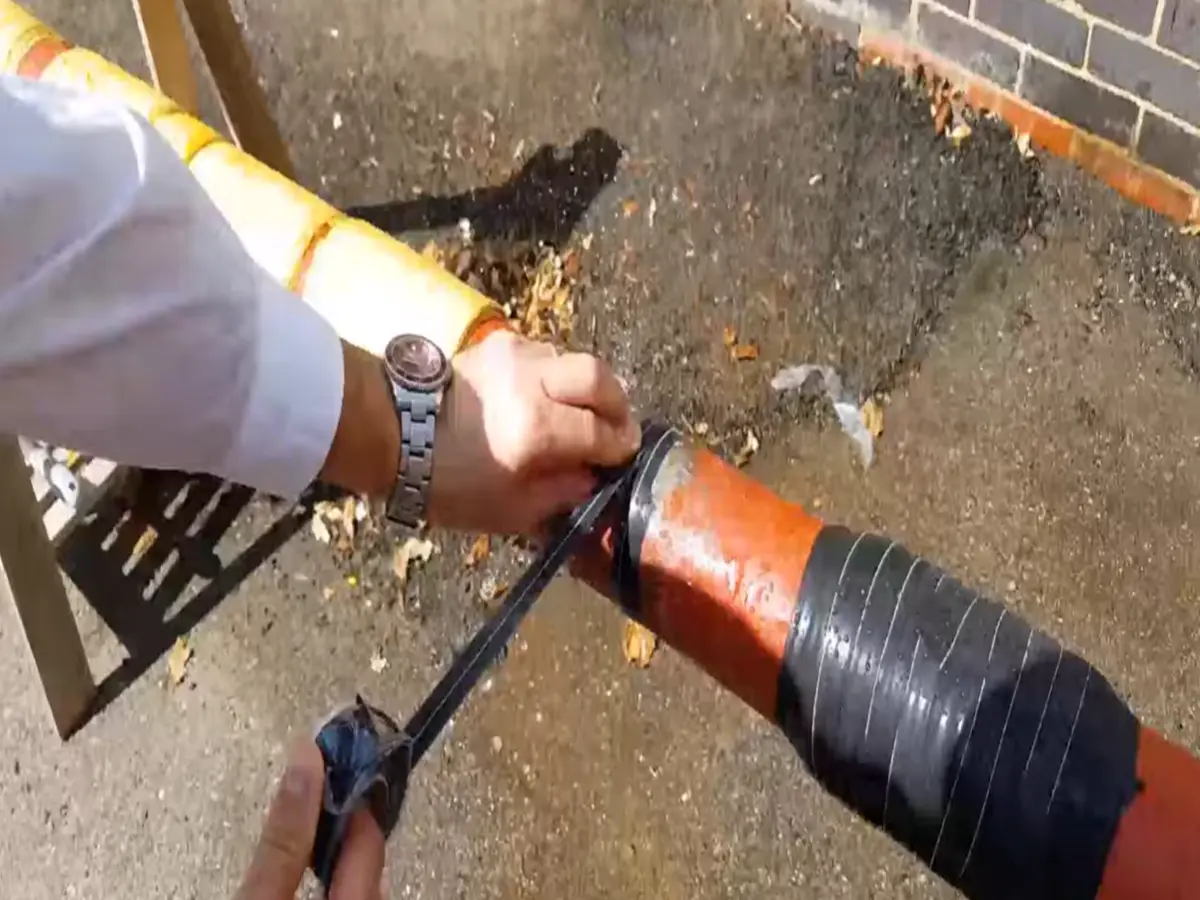
Copper supply line pinhole? That’s typically a section replacement with sweat-soldered fittings or push-to-connect (SharkBite) couplings — depending on pipe condition and access. A corroded galvanized run in an old Sellwood or Woodstock bungalow usually means full section rerouting in copper or PEX, because galvanized doesn’t patch cleanly. Slab breach? The concrete has to be opened at the exact marked location, the pipe section replaced, and the concrete patched and cured before flooring goes back.
We also do rerouting jobs — where we abandon the failing section entirely and run a new line through the wall cavity or overhead. This is often the cleaner long-term fix for Portland homes with aging copper under a slab, rather than opening concrete multiple times over the next decade.
One thing we hear constantly from Portland homeowners: “The other plumber said they’d have to open a big section to even find it.” That’s not how we work. We don’t repair blind. If you already have a detection report with a marked location, great — we work from that. If you don’t have one yet, we partner with leak detection specialists who can pinpoint the break before we ever touch the pipe. Targeted repair based on confirmed location is faster, cheaper, and less destructive than exploratory work.
We pull permits for slab work and for reroutes that involve structural penetrations. This matters for two reasons: your insurance adjuster needs to see permitted, licensed work to process a claim, and permitted work gets inspected — which protects you if you ever sell the house. An unpermitted slab repair discovered during a home inspection is a problem. Our work passes inspection.
Every repair comes with a written one-year warranty on the work. If the repaired section fails within a year, we come back and fix it at no charge. That’s not a marketing promise — it’s in writing on your invoice.
Every Kind of Leak Repair We Handle in Portland
Different leaks, different pipes, different access situations. Here’s what we repair and what each job typically looks like.
Copper Supply Line Repair
The most common repair in Portland’s 1960s–80s housing stock. A section of failed or corroded copper pipe is cut out and replaced with a new copper section or push-to-connect coupling. For pinholes in otherwise sound pipe, a targeted section replacement is the right fix. For pipe that’s showing widespread corrosion or dezincification, we recommend rerouting before you’re chasing leaks one by one.
Most Common · Supply SideSlab Breach Repair
When the leak is under your concrete slab, repair starts with opening the concrete at the exact marked location — not a “search zone,” but the specific spot identified in the detection report. We cut a precise opening, replace the failed pipe section, test the repair under pressure, then patch and cure the concrete. Flooring restoration (tile, hardwood, carpet) is scheduled as a separate trade after the concrete cures.
Slab Homes · Beaverton, Tigard, Lake OswegoAbove-Slab Reroute
Instead of opening the concrete, we abandon the failing under-slab pipe entirely and run a new supply line through the wall cavity, attic, or crawlspace. This is the permanent fix for homes where the entire under-slab copper system is aging — you stop chasing future leaks one at a time. PEX is the standard material for reroutes: flexible, freeze-resistant, and rated 25+ years. We patch drywall and restore finishes as part of the job.
Long-Term Fix · No Concrete WorkGalvanized Pipe Repair & Replacement
Galvanized steel pipe was standard in Portland homes built before the late 1950s. It corrodes from the inside out, and once a section starts leaking, the pipe upstream and downstream is usually compromised too. We don’t patch galvanized — we replace it. If you have a pinhole in a galvanized run in your Sellwood, Eastmoreland, or Woodstock bungalow, the smart repair is a full section swap to copper or PEX, not a band-aid fix that fails six months later.
Pre-1960 Homes · Full SectionFitting & Joint Failure Repair
A lot of Portland leaks aren’t in the pipe itself — they’re at a fitting, elbow, or soldered joint that’s worked loose or corroded through. These are often smaller repairs but can be tricky to access. We see this most often at under-slab fittings in post-tension slab homes, at elbows near the water heater, and at tee fittings in older copper manifold systems. When the fitting is the problem, we replace the fitting and retest, not just resolder an already-weakened joint.
Joints · Elbows · ManifoldsDrain Line & Sewer Lateral Repair
Supply line leaks get all the attention, but drain line failures cause just as much damage — and they’re harder to spot because the water only flows when something drains. Cracked ABS, root-invaded clay, or belly-sagged cast iron under a Portland home’s slab or yard can leak sewage into the soil for months before anyone notices. We repair and replace failing drain sections and coordinate camera inspection when the full drain condition is unknown.
ABS · Cast Iron · Clay LateralsWhy Portland Pipes Fail — and What That Means for Your Repair
The repair approach that works in Phoenix doesn’t necessarily work in Portland. Here’s what shapes leak repair decisions specifically in this market.
Bull Run Soft Water and Copper Corrosion
Portland’s water comes from the Bull Run watershed — clean, cold, and soft. Soft water is low in dissolved minerals, which makes it slightly more aggressive toward copper than hard water. Hard water leaves a thin calcium carbonate coating on the inside of copper pipe that acts as a barrier. Portland water doesn’t do that. The result is copper pipe in Portland homes corrodes from the inside at a faster rate than copper in hard-water cities like Phoenix or Las Vegas. When we see a pinhole, we also assess the surrounding pipe carefully — because in Portland, pinholes tend not to be isolated events in copper that’s 40+ years old.
Post-Tension Slabs in the Tualatin Valley Suburbs
Beaverton, Tigard, Lake Oswego, and Tualatin went up fast during the 1970s housing boom, largely on post-tension concrete slabs. Post-tension means there are steel cables under tension running through the concrete — a structural system that makes the slab stronger but means you absolutely cannot cut concrete randomly. Any slab repair in these suburbs requires knowing exactly where the cable grid runs before anyone touches a saw. We work from confirmed detection locations and apply standard cable-avoidance clearances for the construction era before opening any concrete. This is non-negotiable — cutting a post-tension cable can cause a slab failure.
Willamette Valley Clay Soil and Ground Movement
The clay-heavy soil in the Portland metro expands when wet and shrinks when dry. That seasonal shrink-swell cycle — big wet winters, dry summers — moves the ground under slabs and around buried pipes by small but meaningful amounts every year. Over decades, that movement stresses pipe joints, particularly copper elbows and tees at or near the slab. The repair strategy accounts for this: where possible, we use flexible connections or push-to-connect fittings at locations where the pipe transitions through concrete, rather than rigid solder joints that are vulnerable to the same movement that caused the original failure.
Portland’s Older Housing Stock
Roughly 40% of Portland’s single-family homes were built before 1970. That means original copper, original galvanized, original cast iron drain lines — and in some cases, lead service lines still connecting older homes to the street main. We see the full range in neighborhoods like Sellwood, Montavilla, St. Johns, and Alberta Arts District. When we repair in an older home, we document what we find and flag anything that may need attention beyond the immediate repair. We don’t manufacture upsells, but we also don’t walk past something that’s going to fail in six months and say nothing.
Oregon CCB Licensing and Permit Requirements
Oregon requires a Contractor Business License (CCB) for any plumbing repair beyond minor maintenance. City of Portland requires permits for slab work, for reroutes, and for any work that involves structural penetrations. Some contractors skip permits to save time and money — and pass that risk to you. When a non-permitted repair gets discovered during a home inspection, it becomes a disclosure issue that can hold up or kill a sale. Our work is CCB-licensed, permitted where required, and passes city inspection. That paper trail protects you.
Insurance Claim Documentation in the Portland Market
Most Oregon homeowners’ insurance policies cover sudden and accidental water damage — including the cost of the pipe repair and the concrete work, in most cases. What they don’t cover is gradual damage from a leak that was ignored. The documentation timeline matters: when the leak was discovered, what condition the surrounding materials were in, and what the repair scope was. We provide a written job summary with dated photos for every repair, formatted to support the claim documentation your adjuster needs. Homeowners in Beaverton and Lake Oswego especially rely on this — we’ve seen dozens of successful insurance claims that started with proper repair documentation.
How a Leak Repair Actually Goes — Start to Finish
No surprises, no scope creep. Five steps from your call to a tested, warranted repair with full documentation.
Assessment & Scope
We start by reviewing the detection report if you have one, or by doing a field assessment if you don’t. We identify the pipe material, the access situation, and whether a permit is required. You get a written scope of work and a fixed-price quote before anything starts — no hourly billing that expands mid-job.
Permit Pull (If Required)
Slab repairs and reroutes in Portland require a building permit. We pull it before the job starts. This adds a day or two to the timeline but protects you legally and for insurance purposes. Minor repairs to accessible pipe sections don’t require permits and can often be done same-day.
Targeted Repair
We open only what needs to be opened. For slab work, that’s the marked location from the detection report — typically a 12-to-18-inch concrete opening. For accessible pipe, it’s the failed section only. We replace the pipe with the appropriate material, make clean connections, and protect surrounding finishes during the work.
Pressure Test
Before any concrete is patched or walls are closed, we pressure test the repaired section — typically at 1.5 times the working pressure, held for a minimum of 15 minutes. If it holds, we proceed. If there’s any issue, we find it now, not six months from now when it’s behind the wall. The test results are documented.
Restore & Document
Concrete is patched and left to cure. Drywall is patched on reroute jobs. We clean the work area and provide a written summary with dated photos — the material used, the section replaced, the test result, and the warranty terms. This goes into your insurance file and your home’s service records.
Which Repair Method Is Right for Your Situation?
The right fix depends on the pipe type, the location, and how many failures you’ve had. Here’s a straight comparison — no upsell, just the facts.
| Method | Best For | Concrete Work? | Typical Cost | Longevity |
|---|---|---|---|---|
| Targeted Section Replacement | Single isolated pinhole or fitting failure in otherwise sound pipe | Only if under slab | $500–$1,500 | 15–25 yrs at repaired section |
| Above-Slab Reroute Most Popular | Aging copper under a slab, multiple past leaks, post-tension slab homes | No | $1,800–$4,500 | 25+ yrs (PEX) |
| Epoxy Pipe Lining | Straight copper runs in good overall condition, no joint failures | No | $1,500–$4,000 | 10–20 yrs |
| Full Repipe | Whole-house aging copper, galvanized, multiple failure points | No (runs above) | $4,000–$10,000+ | 25+ yrs (PEX) |
| Galvanized Replacement | Pre-1960 homes with original galvanized supply lines | Rarely | $800–$3,500 | 25+ yrs (copper or PEX) |
Prices are Portland metro market ranges for 2024–2025. Exact quotes depend on pipe size, access, permit fees, and material costs at time of job. We provide written fixed-price quotes before work starts.
What Does Leak Repair Cost in Portland?
Fixed-price quotes before we start. No hourly billing that expands while you’re not watching. Here’s the full range for the repairs we do most often.
Open concrete at marked location, replace pipe section, pressure test, patch concrete. Excludes flooring restoration and permit fee (if required).
Abandon under-slab line, run new PEX supply through wall/ceiling. Includes drywall patch. Permit included. Most Portland homeowners choose this for long-term peace of mind.
Section replacement on an exposed supply line — under a sink, in a crawlspace, in an accessible wall. Faster job, same licensed work and warranty.
Section-by-section replacement of failing galvanized supply line with copper or PEX. Common in Sellwood, St. Johns, Woodstock, and Alberta Arts District homes built pre-1960.
Insurance note: Oregon homeowners insurance typically covers sudden and accidental leak repair — including the pipe replacement and any concrete work. Gradual leaks that were ignored are often excluded. Our repair documentation — written job summary, dated photos, pressure test results — is formatted to support your insurance claim. Call us and we’ll walk you through what your adjuster will likely need.
What Our Customers Say
Real reviews from homeowners who needed a leak fixed — not just found — and got it done right the first time.
“We had a slab leak under our master bathroom confirmed by a detection company. Three plumbers gave us vague estimates and kept talking about ‘opening up a larger section to see what we’re dealing with.’ This crew showed up, looked at the marked spot, gave us a fixed price on the spot, pulled the permit, and had the concrete open and the pipe replaced in one day. The concrete patch was done that afternoon. We had tile back down by the end of the week.”
“We’d had two slab leaks in three years. The second one, our plumber recommended just opening the floor again. These guys explained the reroute option — run a new PEX line above the slab through the walls, abandon the old copper under the concrete entirely. I wish someone had explained that option to us two years ago. The reroute took about five hours, no concrete work at all, and we haven’t had a leak since. Way less disruptive than I expected.”
“Old bungalow in Woodstock — original galvanized supply lines. The kitchen pipe started leaking at an elbow and I knew it wasn’t just the elbow. They inspected the full run, gave me a quote for replacing the whole kitchen supply section with copper, and did it in a day. Told me the bathroom run would need attention in the next year or two and gave me an honest assessment of what to budget. No pressure, no upsell. Just useful information. I already referred two neighbors.”
Two Leak Repairs We Completed This Year
Different homes, different pipes, different repair approaches — both done right the first time.
Post-Tension Slab: Second Leak in Two Years — Reroute Instead of Repeat
1977 post-tension slab home in the Metzger area of Tigard. Homeowner had already had one slab repair done two years earlier on the hot water line under the kitchen. Now a second leak was confirmed — same type of pipe, different location, under the hallway bath. The homeowner asked directly: “Do I just keep opening the floor every two years?”
We assessed the full copper supply system — both hot and cold lines — and found the pipe was original 1977 copper showing widespread corrosion and pitting throughout. We recommended abandoning all under-slab copper and running new 3/4-inch PEX supply lines overhead through the attic and down through interior walls to all fixtures. Permit pulled from Washington County. Job completed in one day by a two-person crew.
Zero concrete work. No flooring disturbance. Drywall patched at penetration points and painted same day. Homeowner now has PEX supply lines with a 25-year material life and no copper under the slab to fail. Insurance covered a significant portion of the reroute cost as follow-on damage repair from the prior confirmed leak.
1952 Bungalow: Galvanized Supply Failure at Kitchen Manifold
Original galvanized steel supply lines throughout a 1952 St. Johns craftsman bungalow. A pinhole appeared at a tee fitting on the cold water line feeding the kitchen. The homeowner had noticed low pressure in the kitchen for about a year — classic galvanized buildup narrowing the pipe from the inside — before the actual breach appeared.
Inspected the full cold supply run from the meter to the kitchen. Found significant interior corrosion narrowing the pipe to less than 40% of original diameter across a 12-foot section. Replaced the failing section — including the corroded manifold tee — with new 3/4-inch copper, soldered connections, pressure tested to 125 PSI for 30 minutes. Also documented the hot water galvanized run condition for the homeowner’s records, with an honest timeline estimate for when that run would likely need attention.
Kitchen water pressure restored to full flow. Homeowner reported the difference was immediately noticeable. Written job summary provided for home records. No permit required for this scope (accessible pipe replacement, no structural penetrations). Completed in under four hours.
Leak Repair Across the Portland Metro
We run repair crews across the full metro seven days a week. Here’s where we work most often — and what we typically see in each area.
Beaverton
High volume of post-tension slab repair and reroutes. 1970s–80s copper at end of service life.
Lake Oswego
Custom and ranch builds from 1960s–70s. Copper supply lines, often with slab access challenges.
Tigard
1970s–80s suburban stock. Mix of slab and crawlspace pipe configurations.
Tualatin
1980s–90s builds. CPVC and early copper, both showing age-related failures.
Milwaukie
Mid-century homes. Mix of galvanized and early copper. Active repair calendar year-round.
Gresham
East Portland and Gresham growth areas. Crews already running past I-205 regularly.
SE Portland
Sellwood, Woodstock, Eastmoreland — galvanized replacement and copper repair in pre-1960 homes.
N Portland
St. Johns, Kenton, Arbor Lodge — bungalow era original plumbing. Heavy galvanized caseload.
Leak Repair Questions — Answered Straight
The questions Portland homeowners ask us before they book. Plain answers, no runaround.
Ready to Get the Leak Fixed — For Good?
Whether you have a marked slab location ready for repair or you’re still figuring out what’s going on, call us. We’ll tell you what the job involves, what it costs, and when we can get there. Same-day repair available across the Portland metro.
(503) 914-2356